
Relay
Mid-to-high-end pushbutton switches, indicator lights, relays, buzzers and accessory solutions
Industrial relays by Wenzhou Jinhong: general-purpose, PCB, slim & force-guided series (ZJ10F/18F/157F/41F) with matching DIN-rail sockets. CE/UL, OEM.
Contact Us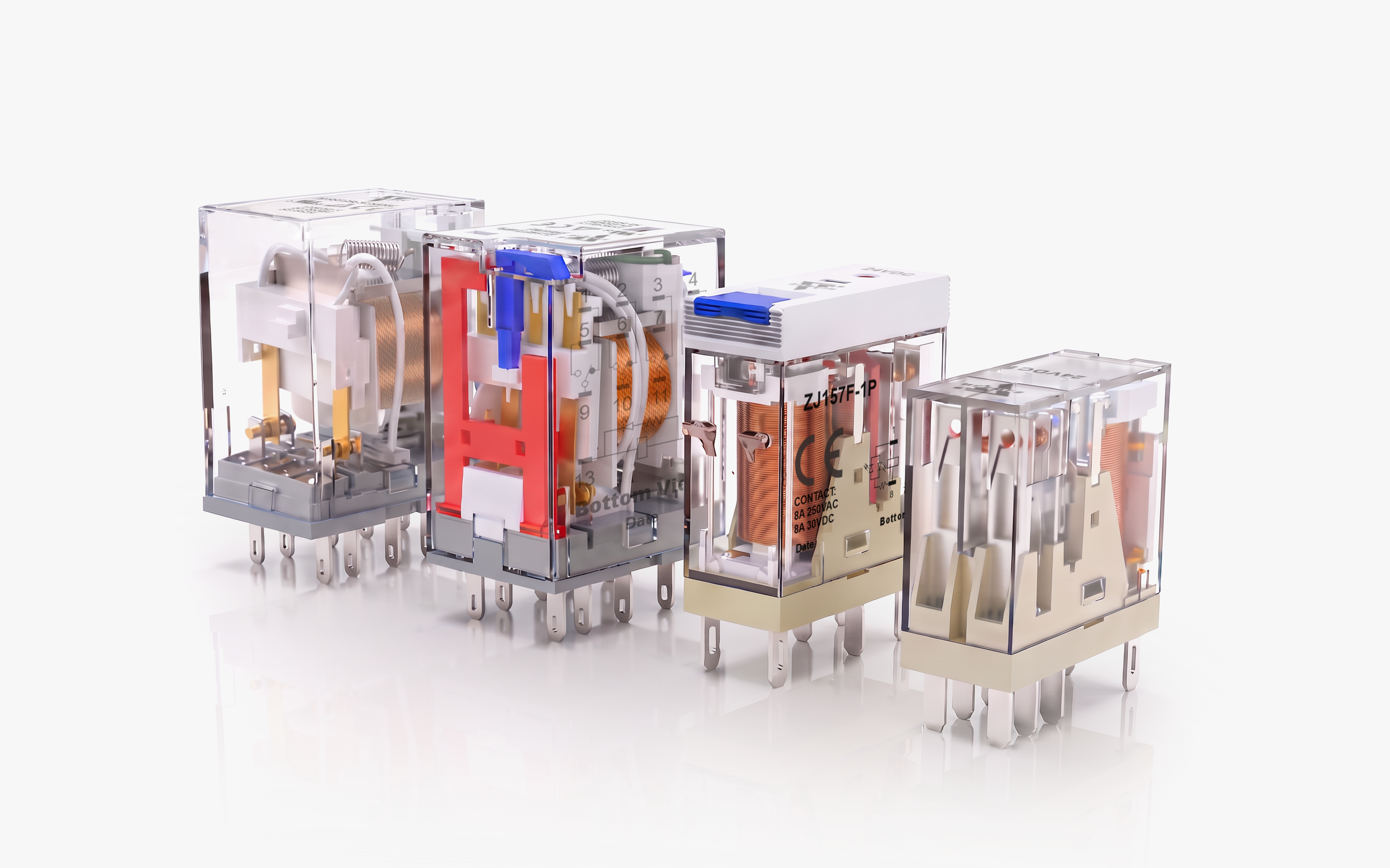
Product range
Choose a category.
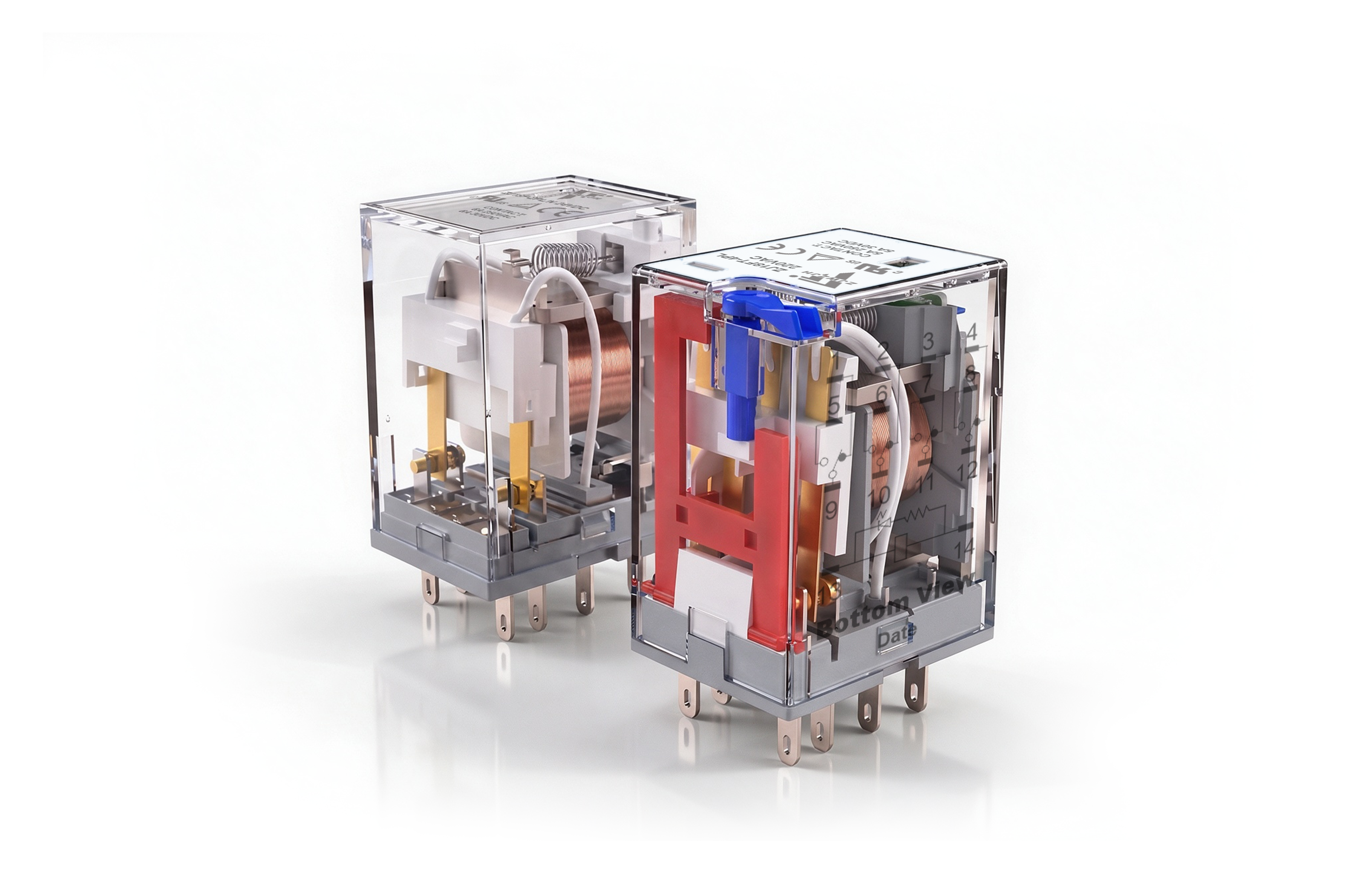 General Purpose Relay
General purpose plug-in relays — ZJ10F 10A octal and ZJ18F miniature 2/3/4-pol…
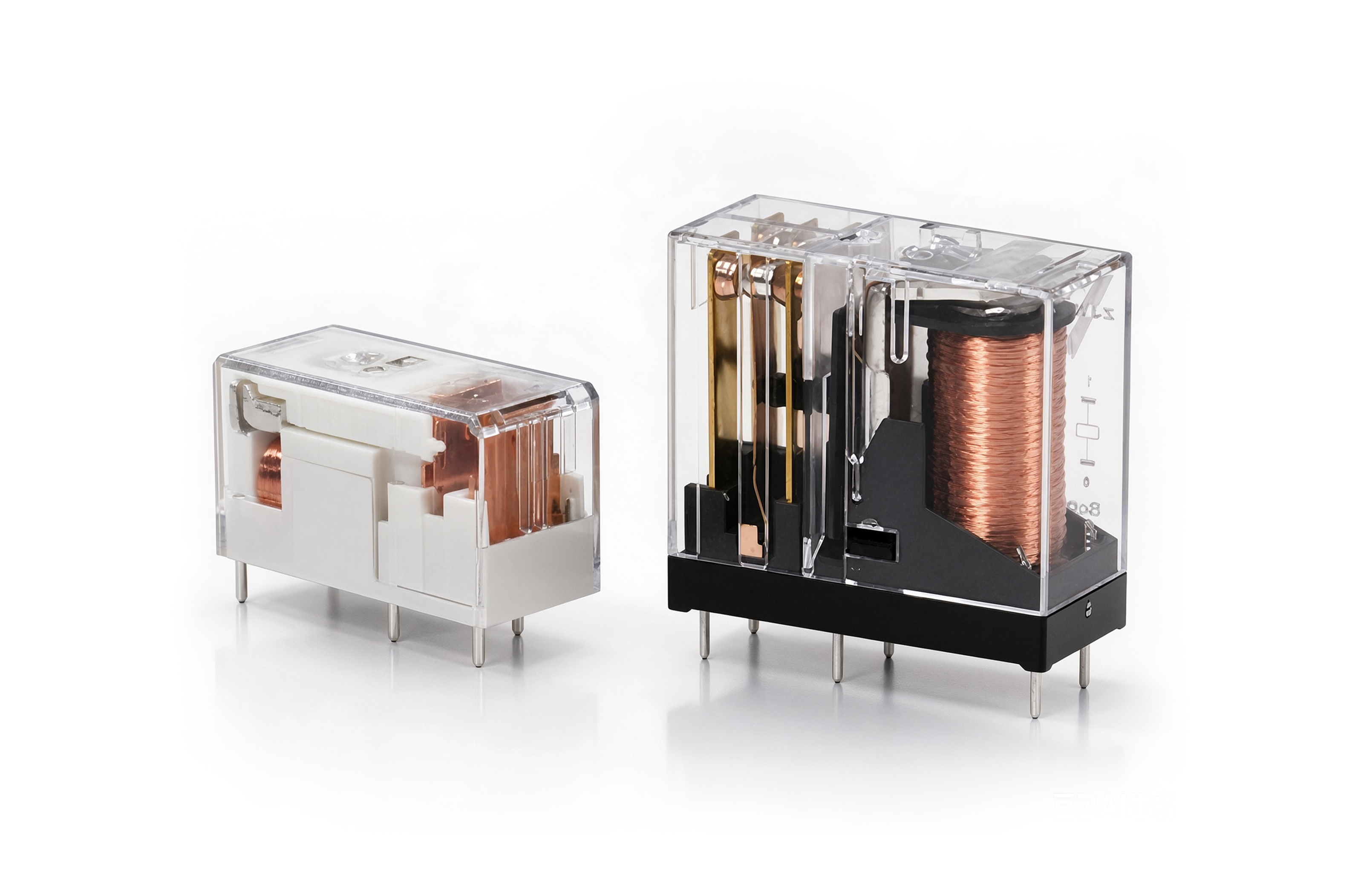 PCB Relay
PCB-mount relays — ZJ14F miniature (5/10A) and ZJ115F power (16A), silver-allo…
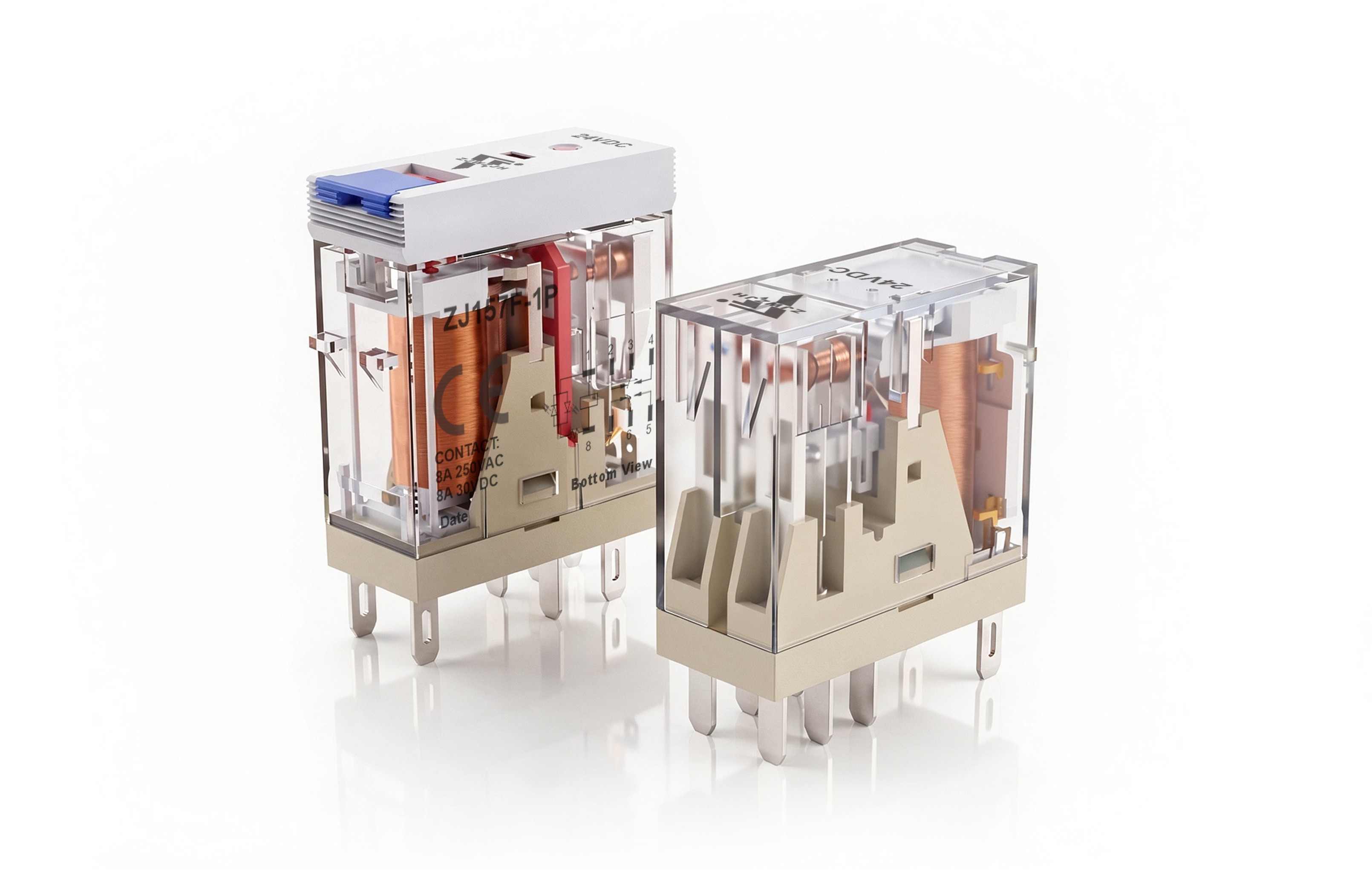 Slim Relay
Slim interface relays — ZJ41F 6A ultra-thin, ZJ41S solid-state (SSR), ZJ157F p…
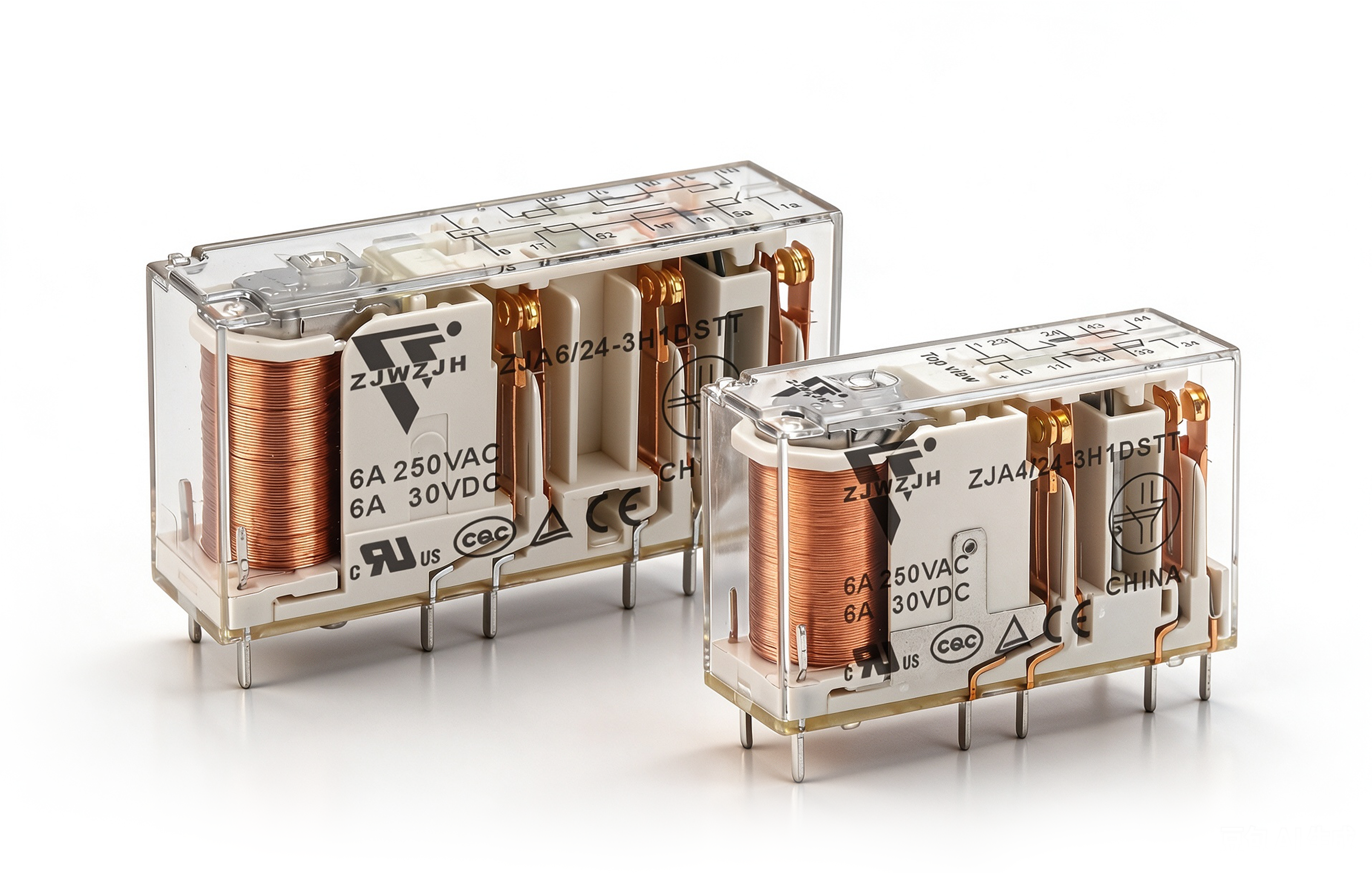 Force-Guided Relay
Force-guided safety relays — ZJA4 4-pole and ZJA6 6-pole, IEC 61810-3 / EN 502…
Industrial relay selection: type, load, contacts and socket
Choose the relay by the circuit it switches and the supply available to its coil. General-purpose plug-in, slim interface, PCB and force-guided relays serve different purposes. A high thermal or maximum switching value is not a universal load rating.
| Relay type / model | Contact choice | Load / application check | Mounting / base |
|---|---|---|---|
| ZJ10F general-purpose relay | 2CO / 3CO variants | Panel control: check the selected AC/DC coil and load rating; do not infer motor suitability from a resistive rating. | 10F-2Z-C4 socket / 10F-3Z-C1 socket |
| ZJ18F miniature relay | 2CO / 3CO / 4CO variants | Multiple control circuits: choose the pole count and verify the rating per contact. | 18F-2Z-C11 socket · 18F bases |
| ZJ157F interface relay | 1CO / 2CO variants | Relay interfacing: check coil power, actual switched voltage and current, and minimum load. | 157F-1Z-C5 socket · 157F bases |
| ZJ41F slim interface relay | 1CO | Dense control panels: check the signal/load rating and coil suppression option. | 41F-1Z-C2 base / 41F-1Z-C6 base |
| ZJ115F PCB power relay | Choose the exact model and pole version | Board-mounted loads: compare current, temperature and endurance at the actual load. | Direct PCB solder terminals; no DIN-rail socket. |
| ZJ14F relay | Select the required 1CO / 2CO version | Board or interface design: confirm the terminal version and load specification. | 14F PCB sockets; verify the selected footprint. |
| ZJA4 / ZJA6 force-guided relay | A4: 2NO+2NC or 3NO+1NC. A6: 5NO+1NC, 4NO+2NC or 3NO+3NC. | Components for a monitored safety design; not a ready-to-use safety controller. | A4 screw base / A4 push-in base · A6 screw base / A6 push-in base |
Specify the load before choosing the current rating
| Load | What to provide | Why it matters |
|---|---|---|
| Resistive heater / test load | Operating voltage, steady current, duty and ambient temperature. | Use the applicable resistive rating and endurance data. |
| Solenoid / contactor coil | AC or DC, steady current, inrush and suppression circuit. | Inductive switching stress differs from resistive operation; coil suppression can affect release time. |
| Lamp / LED driver / power supply | Input type, inrush peak/duration and switching frequency. | A low steady current can coexist with a much higher turn-on current. |
| PLC / low-level signal | Minimum voltage/current, required isolation and switching life. | Check minimum load and contact material; a power-contact rating alone is insufficient. |
| Motor | Motor-specific rating, starting current and switching duty. | Do not convert a general-purpose resistive ampere rating into a motor rating. |
See relay application precautions for the distinction between inductive and resistive switching. Model-specific JINHONG data remains the basis for selecting our products.
Complete the relay and base order
Provide the exact model, coil voltage and AC/DC type, contact arrangement, load details, socket termination, environment and quantity. Compare relay socket wiring methods or request a relay selection review.
Contact us on WhatsApp
Choose how to continue. If WhatsApp Web is unavailable, open the app or copy our number.
+8613968766559