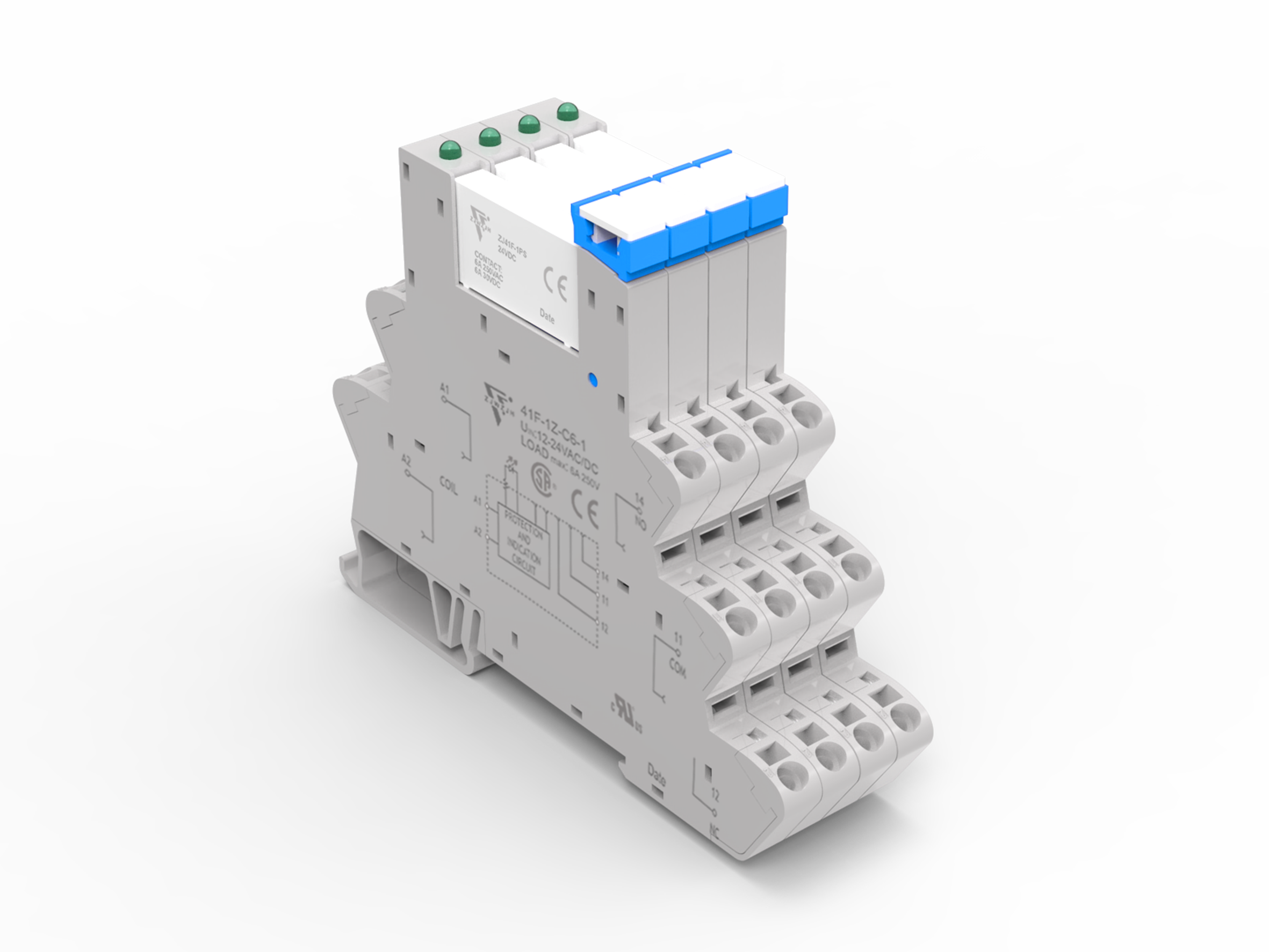
Product guide
Push-In Relay Sockets: Conductor Preparation Matters
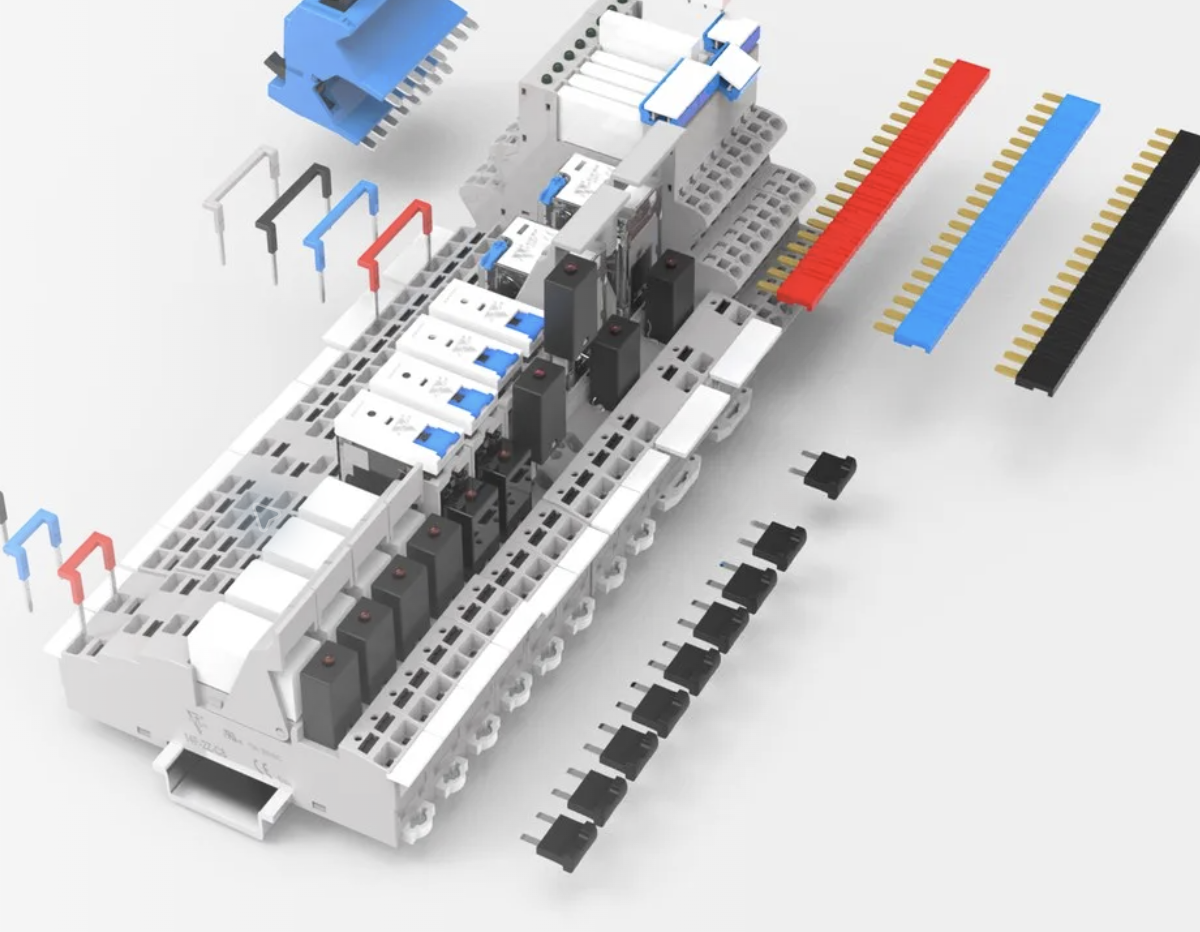
Understand push-in relay socket wiring: conductor type, ferrules, stripping length, release access and relay compatibility.
In this article
Push-in relay sockets use spring terminals to connect conductors to a removable relay. They can simplify repetitive wiring, but a reliable connection still depends on correct conductor preparation and the socket’s instructions.
Direct insertion is conductor-dependent.
Some terminals accept specified solid or ferruled conductors directly. Fine-stranded wire without a ferrule may require the spring to be opened with a tool. Check the documented conductor range and method rather than forcing a wire into the opening.
Preparation and inspection.
- Isolate the circuit before inserting or removing wiring.
- Use the stated stripping length and, where required, the correct ferrule and crimp.
- Insert into the conductor opening, not the release point.
- Check retention and ensure that exposed copper cannot contact another terminal.
- Leave access for the specified release tool and identify the circuit with suitable markers.
The connection is only one selection factor.
Match the socket footprint and terminal numbering to the exact relay. Review the assembly’s current, voltage and temperature limits, plus any retaining clip or coil accessory. Spring contact pressure does not remove the need to inspect a panel for damaged wires, contamination or other maintenance issues.
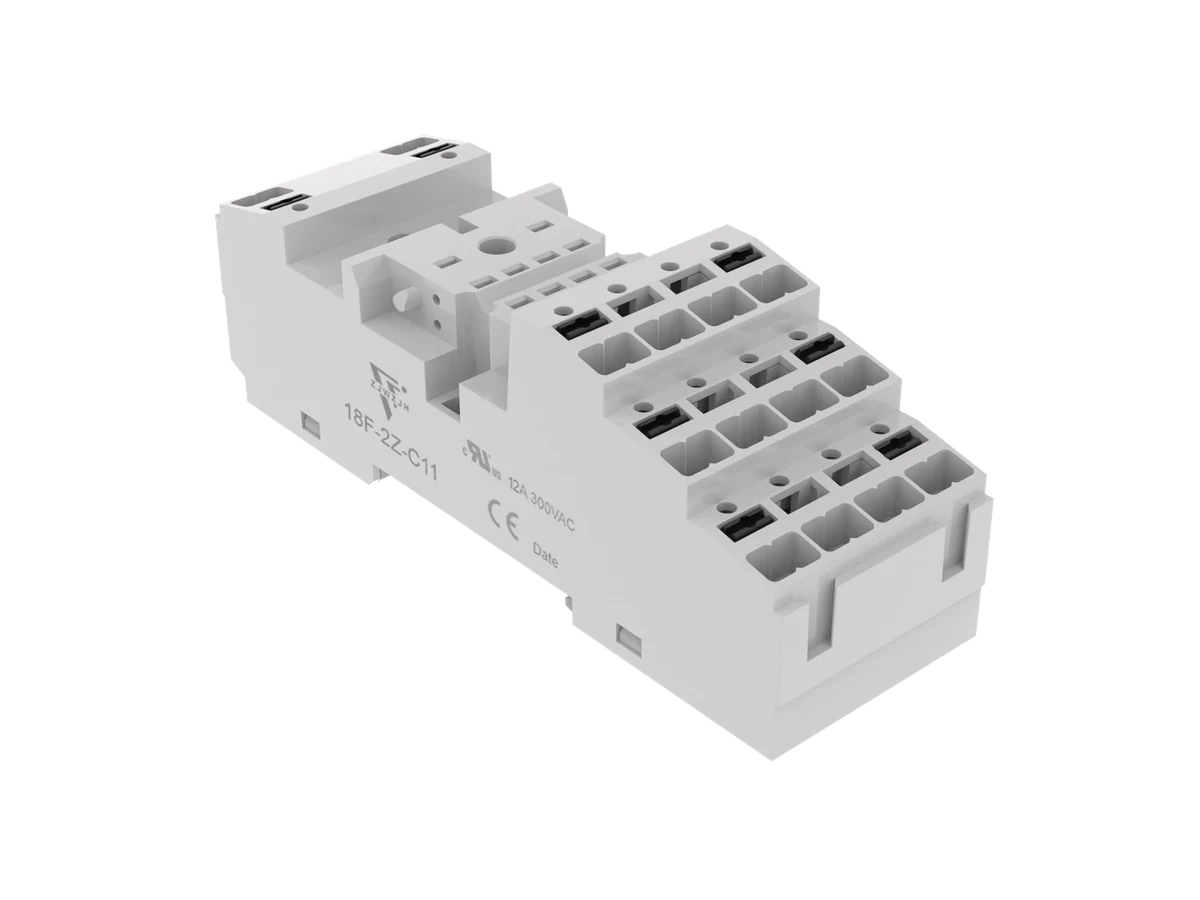
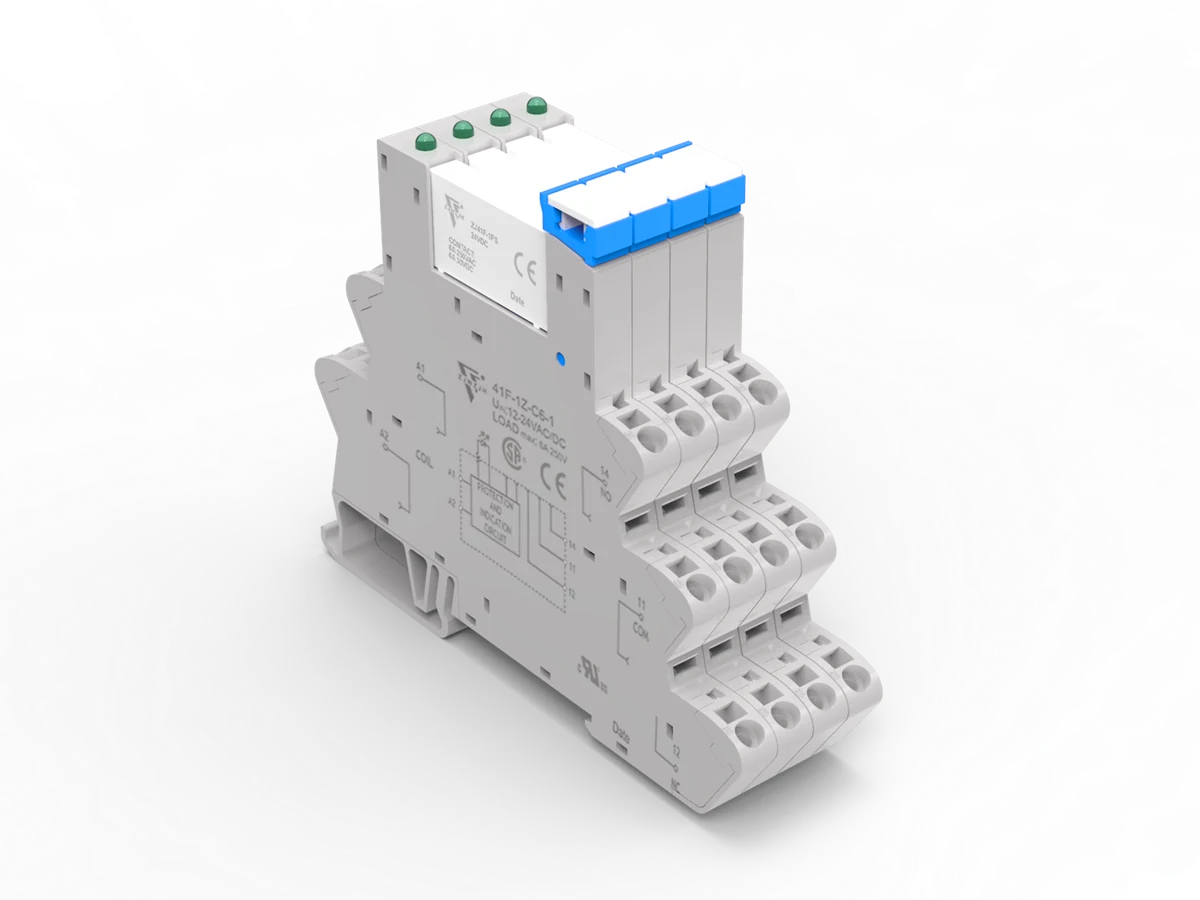
Start with the 18F push-in sockets or 41F push-in sockets. Compare alternative connection methods in the relay terminal guide.
Product examples
Original product video
Watch the original video on Tencent Video if the embedded player is unavailable.
Conductor preparation record
Make the actual terminal instructions available at the wiring station. Record the allowed conductor preparation instead of relying on a general description of push-in technology.
| Check | Information to record |
|---|---|
| Wire type | Solid, stranded or ferruled conductor as permitted by the socket instructions. |
| Preparation | Specified cross-section, stripping length and ferrule dimensions where applicable. |
| Inspection | Conductor retention, exposed copper and access to the release point. |
Can every stranded wire be pushed in without a tool?
No. Direct insertion depends on the terminal and conductor preparation. Follow the instructions for the exact socket rather than forcing a conductor into place.
Explore the products
Catalogue examples from the ranges discussed. Open a model to check its configuration and technical details.
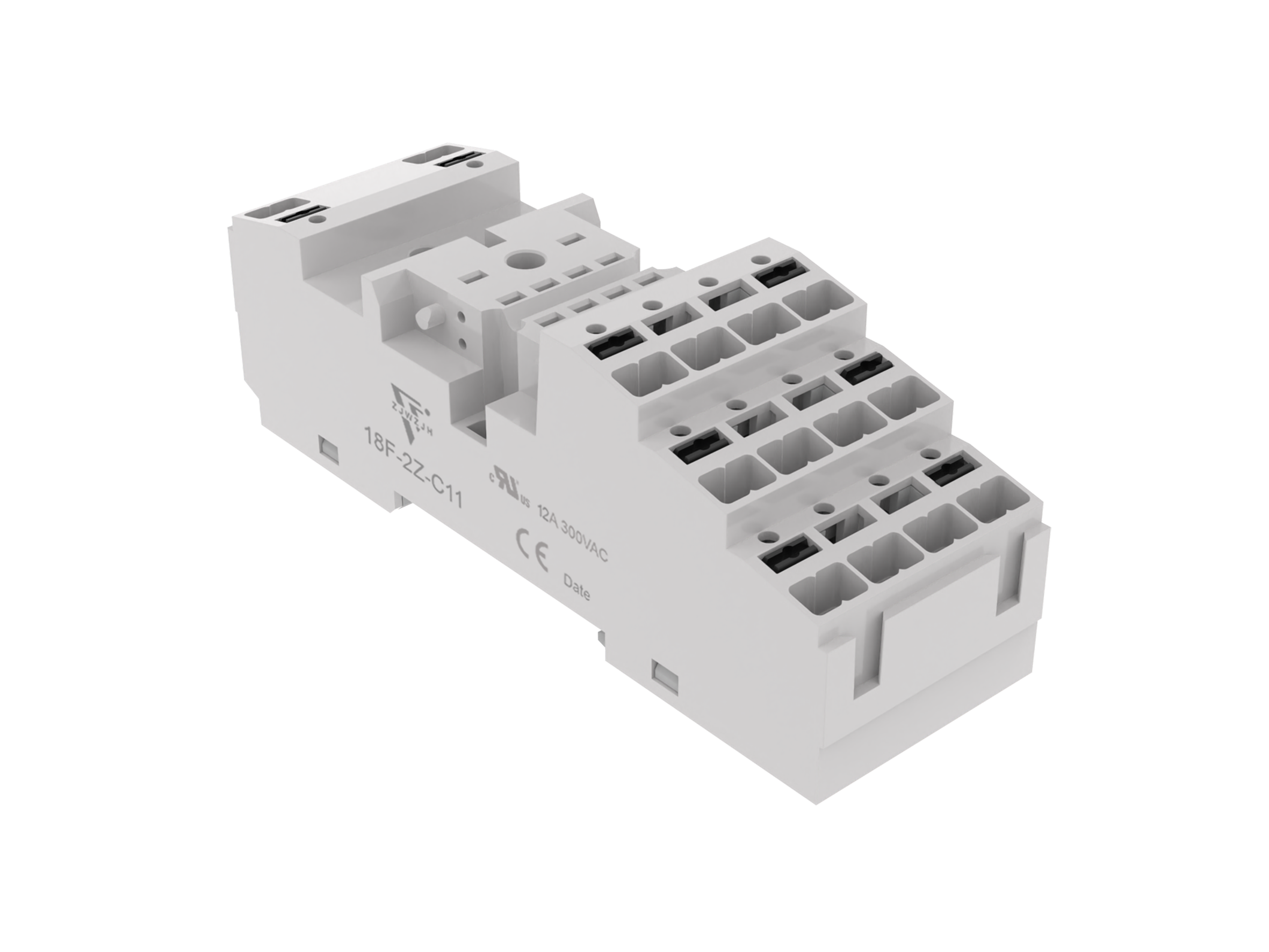
18F-2Z-C11 Push-in Relay Socket
View model Download product document