Product guide
Isolator Switch vs Circuit Breaker: Key Differences
Separate isolation, load switching and overcurrent protection when choosing a disconnector, switch-disconnector or circuit breaker.
In this article
Isolation, normal load switching and fault protection are different functions. A single device may provide more than one, but only when its markings and documentation say so.
Compare the functions.
| Device | Main function | Important limitation |
|---|---|---|
| Disconnector | Provide isolation under specified conditions | Not intended to interrupt load current unless specifically rated for it |
| Switch-disconnector | Combine rated load switching with isolation | Does not automatically provide overload or short-circuit tripping |
| Circuit breaker | Interrupt faults within its rated capability | Isolation suitability must be confirmed from the device data and markings |
Isolation is more than an OFF handle.
An isolating device needs the documented isolation characteristics and a suitable means of confirming its open state. This may be a visible contact gap or a compliant mechanical indication; not every isolator exposes the contacts for viewing.
An open switch does not prove that all hazardous energy is absent. Multiple supplies, stored energy and backfeeds must be addressed by the installation’s isolation procedure, including verification before work.
Selection information.
Specify AC or DC voltage, operating current, load type, required poles and whether switching occurs under load. Check short-circuit coordination, enclosure and handle arrangements, and any locking requirements. Use the manufacturer’s connection diagram rather than assuming that AC and DC arrangements are identical.
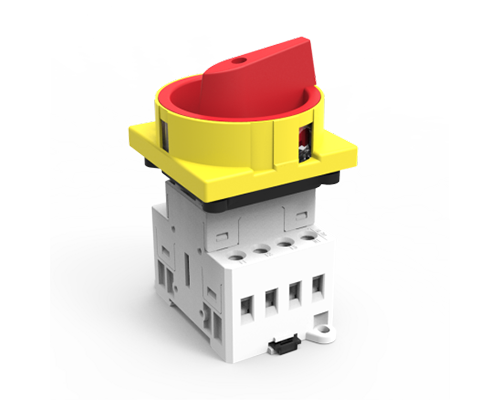
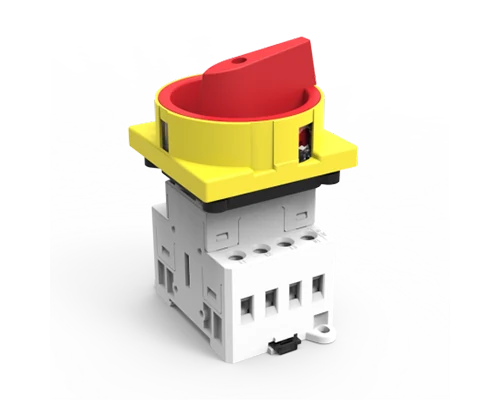
Jinhong’s isolator range is a starting point for an enquiry. Send the required function and circuit details to obtain the exact model documentation.
Technical background: Schneider Electric’s Electrical Installation Guide explains switching-device functions and isolation requirements.
Isolation or protection: define the duty
State the required function before choosing a device name. The selected device documentation must establish which duties it can perform.
| Check | Information to record |
|---|---|
| Isolation | Confirm the documented isolation function and operating arrangement. |
| Load switching | Confirm whether the device may make and break the intended load. |
| Overcurrent protection | Identify the protective device and its coordination with the installation. |
Does every disconnector provide overcurrent protection?
No. Isolation and overcurrent protection are different functions. Check which functions are provided by the selected devices in the complete circuit.
Explore the products
Catalogue examples from the ranges discussed. Open a model to check its configuration and technical details.
Request model drawings and selection support